
INVEST WITH ROYALE ENERGY
Royale Energy Adds Value in 2026
-
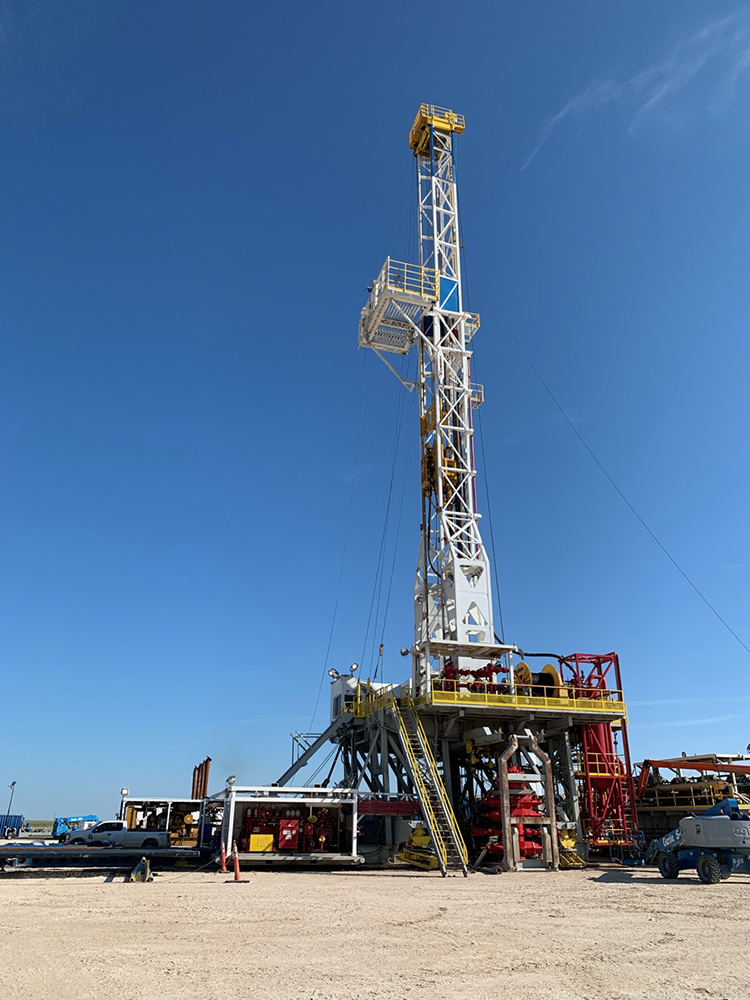
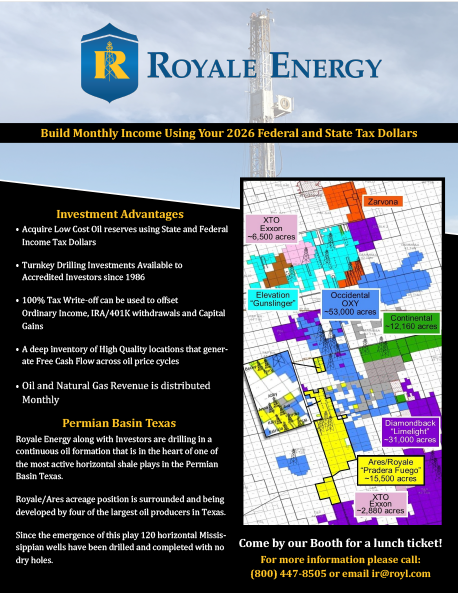
Royale has Development Drilling Projects in the Permian Basin, Texas.
-
In 2026, we have Drilling Projects in Pradera Fuego Field and Jameson North Field.
Royale Energy Inc. is a development oil and gas production Company. Royale owns and operates wells in California and Texas and markets oil and natural gas to its customers.
Royale maintains a commitment to providing investment products, which seek to minimize investor risk while providing maximum return. We have accomplished this through the use of joint investment in multiple wells. This commitment allowed the Company to grow from a small beginning to its current stature as a publicly traded independent producer.
The Company currently owns interest in over 70 producing oil and natural gas wells. Royale Energy is focused on building prospect inventory through acquisitions of property, 3D seismic surveys and field development over some of the most prolific natural gas and oil producing fields.
Royale Energy provides direct management of company properties as needed to monitor and maintain a high level of productivity. We are focused today to identify and develop low risk drilling opportunities wells drilled in known oil and gas fields.
On March 1, 2018, Royale merged with Matrix Oil Management. This strategic transaction created a high-growth California and Texas focused operating company with an extremely experienced technical team and more than 80 proved undeveloped drilling locations. Royale and Matrix both have been successful low-cost finders of oil and natural gas. Today we are focused on the Permian Basin (North Jameson) and Pradera Fuego in Texas.
Sign up to receive our newsletter
When you sign up for our mailing list, you will receive updates on Royale Energy and our current offerings.
Black Gold III Presentation
Transcript
(0:00) But we’re going to talk about the tax advantages of oil (0:03) and gas, you know, building an energy portfolio using money (0:07) that you’d normally go to pay federal (0:09) and state income taxes with. (0:12) It’s unique because most countries (0:14) in the world the government owns the oil and gas reserves (0:18) or the state-run, you know, government-owned oil (0:21) and gas companies own it. (0:23) But here in the United States not only do the private sector (0:27) on it and individuals can own oil and gas reserves, (0:30) but they actually incentivize you (0:32) through significant tax deductions.
(0:35) And it’s been no secret, you know, Biden has wanted (0:39) to get rid of these, Obama wanted to get rid of them. (0:42) And, but, and, you know, Biden calls them a subsidy. (0:46) It’s not really a subsidy, it’s a business deduction, (0:50) Schedule C business deduction.
(0:51) So very, very straightforward, very useful. (0:55) But in 2021 they were, you know, (1:02) debating the Build Back Better tax bill. (1:06) And the Democratic Congress actually rebuffed them and said, (1:10) no, we’re going to keep them, keep the oil and gas deductions.
(1:13) They’ve been in the tax code for over 100 years since 1913. (1:18) And there’s enough states with Democratic congressmen (1:22) and senators with, in oil and gas states that they kept them. (1:27) And so now with the Republican legislature we feel (1:31) like we’re pretty safe.
(1:33) You know, you’re never sure, (1:34) but right now we’re pretty safe with these deductions. (1:37) So these are deductions that are good (1:40) against any ordinary income. (1:43) You can reduce your adjusted gross income.
(1:46) You can offset capital gains, dividend income. (1:49) Anything is deductible with these. (1:51) And how that works is 80% is your intangible drilling costs, (1:57) which is anything you use, you know, which is non-tangible (2:01) for the drilling, vendors, equipment, rentals.
(2:06) And so this is 100% deductible (2:09) and comes right off your adjusted gross income. (2:13) The 20% is for anything tangible, (2:17) anything you can touch or kick or hold. (2:19) It’s for your tangible wellhead equipment, pump jacks, (2:23) pipes, all your equipment.
(2:26) And that, in the old days, we used to depreciate it. (2:29) Now with the Tax Cuts and Jobs Act of 2017, (2:33) we have what’s called bonus depreciation. (2:36) So you can actually deduct that 100% the first year.
(2:40) So the whole thing becomes deductible. (2:43) This year in 2023 they stepped it down to where 80% (2:47) of that is deductible, which I’ll show in a minute. (2:50) But that can be solved through the Section 179.
(2:55) So you can still take 100% deduction. (2:58) Then another significant one is the, (3:01) you not only get a tax deduction going into the acquisition (3:05) of oil and gas reserves, but as you’re producing them back, (3:09) you get a percentage depletion allowance. (3:11) They used to have a cost depletion (3:14) where you recovered your costs over time, you split it up over (3:18) the, divided up your reserves and split it.
(3:21) But now everybody just uses percentage depletion. (3:24) So 15% of your income, gross income, is non-taxable. (3:29) So if you are finding the reserves that you’re looking for, (3:32) the government ends up paying, through tax deductions, (3:36) 100% of your oil and gas reserves.
(3:39) It’s incredible. (3:40) In fact, if you find enough reserves, (3:42) they actually pay you more than what you put (3:46) in for the acquisition. (3:49) So tremendous tax deductions.
(3:51) This has been in the tax code. (3:53) This is a little bit hard to see here, but this has been (3:58) in the tax code since 1986. (4:02) I think I went one, yeah, there we go.
(4:04) So the Tax Reform Act of 1986 is where they split (4:09) out the passive and active investments. (4:12) You remember back in the 70s and 80s (4:14) when they had the limited partnerships? (4:17) Well, those were really just brokers taking the working (4:22) interest ownership, the individual percentage ownership (4:26) in the wells, and then wrapping them in a partnership. (4:29) And then those partnerships, you know, had G&A, (4:32) they had management expenses.
(4:34) You know, a lot of them had carried working interest, (4:36) back ends, and so the partnerships didn’t really work (4:40) that well because they were so heavily loaded. (4:43) Well, then with the Tax Reform Act of 1986, (4:47) they eliminated your ability (4:50) to deduct those against your income. (4:53) You could only deduct limited partnerships (4:55) against passive income.
(4:57) And so that took a lot of the incentive out of, you know, (5:02) real estate and those types of limited partnerships. (5:05) But they exempted the working interest form of ownership (5:09) from those passive loss rules. (5:11) So if you buy a 1% of a drilling project, you’re going to be able (5:15) to deduct that as an active investment.
(5:18) And so it’s a very unique deduction for investing. (5:23) It’s, even though you’re actually literally passive, (5:27) you’re deemed to be active. (5:28) So you’re deemed to be an oil and gas producer.
(5:32) And so to that extent, you can deduct it (5:34) as a business deduction on your Schedule C. (5:37) So this has really been a great incentive for investing (5:41) in drilling of oil and natural gas reserves. (5:46) The, again, the Tax Cuts and Jobs Act enhanced it, (5:50) gave the bonus depreciation, (5:53) and then they also enhanced the Section 179. (5:58) And 179 just says that if you’re not depreciating (6:02) over a certain amount of total depreciation (6:06) that you can take that the first year.
(6:09) And so they increased the amount (6:11) from a half a million to a million. (6:13) And so most of our investors are just taking the 179. (6:18) So last year, they were taking the bonus depreciation.
(6:22) This year, they stepped it down to just 80% (6:24) of your tangible equipment. (6:26) And so a lot of people will take the 179 this year. (6:30) So still 100% write-off.
(6:32) And then how that works is on your Schedule C form, (6:36) you’re going to put in your total investment. (6:39) Here, we just put in 50,000. (6:41) So 40,000 for your intangible drilling costs.
(6:45) That’s 80%. (6:47) And then the other 20%, 10,000, (6:50) is going to go under your depreciation. (6:52) And then that comes around to your front page (6:55) and then reduces your adjusted gross income.
(6:58) So whatever tax bracket you’re in, that’s what you’re, (7:01) it’s going to lower your, or that’s what you’re going (7:04) to get back as a tax refund. (7:06) Like if you put in 100,000 and you’re (7:08) in a 30% tax bracket, you’ll get 30,000 back. (7:12) And then it also can put you into a lower tax bracket.
(7:16) I had Mike Weaver out of Tucson, Arizona, called me last year. (7:22) And he had gotten a stimulus check in the mail for $1,200. (7:27) And he said, I called my CPA and said, (7:30) how did I get a stimulus check? (7:32) And his CPA said your, that your royal investment brought you (7:37) down below $75,000 in income, and that generated a check.
(7:42) So he sent me another check. (7:47) So, so again, how that works is if you put in 100,000 (7:53) into any drilling project, I’m not, you know, (7:55) talking about any specific one. (7:57) But if you put in $100,000 into any type of drilling, (8:02) actual, by a working interest in drilling, then that is going (8:07) to reduce your federal tax adjuster gross income (8:10) by 100,000.
(8:12) So if you put in, or if you earn 200,000, then you’re going, (8:16) it’s going to look like you earned 100,000. (8:19) And so you’re going to pay 30,000 less in taxes, (8:23) even though you’ve made the 200,000. (8:27) And then, excuse me, (8:29) and then the state tax is also applicable.
(8:32) So if you’re in one of the high income states, New Jersey, (8:36) you know, California, New York, it’s even more enhanced (8:40) because of the high, you know, state taxes.
Build Monthly Income
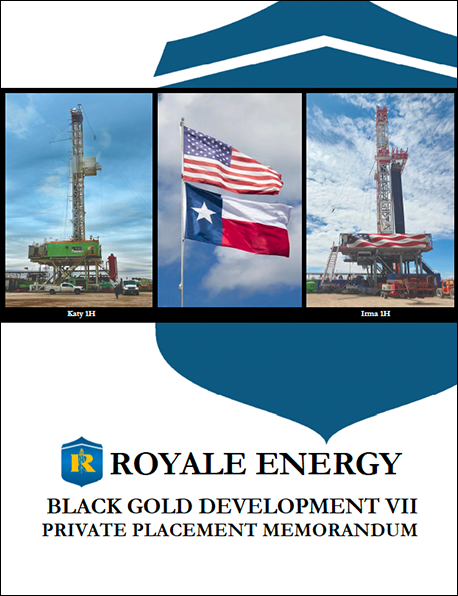
Oil + Development PPR
Learn more about Royale Energy.
We are here to answer any questions you may have.